
Asir Saudi Arabia: A 2026 Mountain Escape Guide

Asir Saudi Arabia: A 2026 Mountain Escape Guide Asir Saudi Arabia stays in the low-to-mid 20s Celsius while most of the Kingdom bakes through summer. That single fact is why Abha and the surrounding highlands turn into one of the country’s busiest domestic destinations every year, and why Asir Season has become a fixture on the national tourism calendar. Perched at altitude in the country’s southwest, Asir province offers fog-wrapped mountains, terraced villages, and a climate that feels borrowed from another continent. If you’re wondering whether it’s worth the trip, what there is to do once you arrive, or when to go, here’s the full picture. Asir Saudi Arabia: What Is Asir Season? Asir Season is an annual tourism season held in Abha, the provincial capital, typically running through the summer months when the rest of Saudi Arabia is at its hottest. It’s organized as part of the Kingdom’s broader push, led by the Saudi Tourism Authority, to develop domestic and international tourism outside the traditional pilgrimage circuit. The season brings festivals, cultural programming, live entertainment, and expanded visitor infrastructure to the region. But Asir doesn’t need a festival calendar to justify a visit. The mountains, the cooler air, and the villages built into the cliffside are reason enough on their own. Why Asir Feels Like a Different Country Most people picture desert when they think of Saudi Arabia. Asir breaks that image entirely. The province sits on the Sarawat mountain range at elevations that regularly climb above 2,000 meters , which is why temperatures here run noticeably cooler than Riyadh or Jeddah for most of the year. Mist rolls through the peaks in the early morning, juniper forests cover the highlands, and the terrain shifts from cliffside terraces to green valleys within a short drive. For travelers based in the Gulf or arriving from abroad, it’s often the first sign that Saudi Arabia’s geography is far more varied than the desert landscapes shown in most travel content. Things to Do in Abha Aseer Province Saudi Arabia Abha is the natural base for exploring the region, and it has enough on its own to fill several days. If you’re searching for things to do in Abha Aseer province Saudi Arabia, here’s where to start. Al Soudah Park and the Cable Car Al Soudah sits near the highest point in Saudi Arabia and is the most visited site in the province. The cable car ride down the mountainside is the main draw, offering views across the valley that are difficult to match anywhere else in the country. Habala, the Hanging Village Habala was once accessible only by rope, with residents lowering themselves down the cliff face to reach the village below. A cable car now handles that job, but the setting, a settlement built directly into the mountainside, is still one of the more striking things to do in Abha and Asir province. Rijal Almaa Heritage Village This UNESCO recognized village is built from stacked stone and painted with traditional geometric patterns. It’s one of the best-preserved examples of Asiri architecture and gives a clear sense of how communities in this region lived before modern infrastructure reached the highlands. Abha Lake and the City Center Abha Lake Park is a straightforward, low-effort way to spend an evening, with walking paths and open space around the water. The surrounding city center also has traditional souks worth a walk-through for local crafts, textiles, and coffee. Getting to Asir: Flights and Travel Time Abha International Airport (ABHA) handles domestic connections from the Kingdom’s major cities, which makes the region accessible without a long overland trip. For international visitors, connecting through Jeddah or Riyadh into Asir Saudi Arabia is the simplest route. Best Time to Visit Asir Saudi Arabia Asir Season itself is timed around the summer heat elsewhere in the Kingdom, which makes it the peak period for domestic travelers. If you’re planning around the season specifically, expect the busiest crowds and the fullest events calendar. Outside of the official season, Asir is still worth visiting. The cooler climate holds through much of the year compared to the rest of the country, and spring in particular brings out the region’s greenery before the summer crowds arrive. A trip of 3 to 4 days is generally enough to cover Abha, Al Soudah, Habala, and Rijal Almaa without rushing. Travelers combining Asir with other parts of the Kingdom often extend this into a longer itinerary. Where to Stay in Asir Abha Accommodation in Abha ranges from international hotel chains in the city center to smaller mountain lodges closer to Al Soudah. Booking ahead matters more during Asir Season itself, when demand from domestic travelers pushes availability down and rates up. For travelers who want the view over convenience, properties positioned closer to the mountain edge tend to book out first. Practical Tips Before You Go A few things catch first-time visitors to Asir Abha off guard: If Asir is one stop on a bigger trip, it’s worth reading our guide to the best places to visit in Riyadh for how to structure a combined itinerary across the Kingdom. Planning Your Trip to Asir Asir rewards travelers who plan around the season rather than against it. Flights, cable car access, and hotel rooms all tighten up once Asir Season is underway, and a route that skips straight to Al Soudah without building in Habala or Rijal Almaa misses most of what makes the region worth the trip in the first place. That’s the kind of planning we handle through our custom tour packages, built around your dates, your pace, and the parts of Asir Saudi Arabia you actually want to see. FAQs What is Asir Season in Saudi Arabia?Asir Season is an annual tourism season centered on Abha, held during the summer months when the region’s mountain climate offers a cooler alternative to the rest of the Kingdom. Is Abha worth visiting?Yes. Abha is the base for exploring Asir province, with access to Al Soudah, Habala,
Maraya Concert Hall AlUla: Inside the World’s Largest Mirrored Building

Maraya Concert Hall AlUla: Inside the World’s Largest Mirrored Building The Maraya concert hall shouldn’t work, at least not on paper. A giant cube covered entirely in mirrors, sitting in the middle of a desert canyon, sounds like the kind of thing an architect sketches on a napkin and never actually builds. And yet here it is, in AlUla’s Ashar Valley, quietly holding a Guinness World Record and hosting some of the biggest names in music. The story of how the Maraya concert hall got there, and why it still stops people mid-sentence the first time they see it, is genuinely one of the more fascinating tales in modern desert architecture. What Exactly Is Maraya Maraya means “mirror” in Arabic, and the name isn’t poetic exaggeration, it’s a literal description. The building is a 100x100x26 metre cuboid steel frame, clad entirely in 9,740 mirrored panels covering roughly 104,840 square feet of exterior surface. Since 2020, it’s held the Guinness World Record for the largest mirrored building on the planet. What makes AlUla Maraya so disorienting in person is exactly what the mirrors are designed to do, reflect everything around them so precisely that the structure seems to disappear. Approach it from certain angles and your eyes genuinely struggle to locate where the desert ends and the building begins. It’s less a building trying to stand out and more one deliberately trying to vanish. Built in 76 Days, Designed to Last Forever Here’s a detail that surprises most people: the entire structure was completed in just 76 days. A Milan-based architectural studio, Giò Forma, led by Florian Boje, Cristiana Picco, and Claudio Santucci, designed Maraya as part of AlUla’s “Journey Through Time” masterplan, the first major project built to turn the region into what’s been described as a living museum. The mirrored panels themselves weren’t a simple engineering task. A total of 3,000 pre-tempered panels were manufactured locally by Guardian Glass, adapted specifically to withstand sandstorms, extreme heat, and the wild temperature swings typical of the Arabian desert. Getting the reflective coating exactly right, so it mirrors the landscape’s colours faithfully rather than distorting them, took extensive testing before construction even began. Maraya officially opened in 2019, unveiled during AlUla’s second season of Winter at Tantora, and it’s been reshaping expectations of what desert architecture can look like ever since. The 500-Seat Maraya Concert Hall That Rivals the World’s Best Step inside Maraya and the mirrors give way to something entirely different, a 26-metre-high concert hall with 500 seats, designed with the kind of acoustic sophistication you’d expect from a world-class opera house. The stage itself is 40 metres by 15 metres, and behind it sits the hall’s signature feature, an 85-foot-tall retractable glass wall that can open completely to reveal the desert canyon beyond. That single design choice transforms every performance. A concert can begin fully enclosed, then open mid-show to blend the stage with the actual desert landscape outside, blurring the line between indoor performance and outdoor spectacle in a way few venues anywhere attempt. The Performers Who’ve Taken the Stage The list of artists who’ve performed at Maraya reads like a genuine international who’s who. Andrea Bocelli, Alicia Keys, John Legend, OneRepublic, Usher, and Seal have all played the venue, alongside regional stars including Mohamed Abdo, Angham, Omar Khairat, and Assala Nasri. Alicia Keys’ performance during a Winter at Tantora season became particularly iconic, the mirrored exterior reflecting the desert as concertgoers arrived, creating what attendees described as a genuinely surreal visual experience before the music even started. Beyond concerts, Maraya has hosted an Andy Warhol art exhibition and the Hegra Conference of Nobel Laureates, proof that the venue’s ambitions extend well past music into art, science, and global dialogue. Why the Design Actually Matters It would be easy to dismiss Maraya as a flashy, Instagram-driven gimmick, a mirrored building exists to be photographed, after all. But the deeper intention behind it tells a different story. The design team’s stated mission was to avoid competing with AlUla’s ancient Nabataean heritage and dramatic sandstone landscape, and instead let the building disappear into it entirely. That’s a genuinely unusual goal for a landmark structure. Most iconic buildings are built to dominate a skyline. Maraya was built to vanish into one, and somehow, in doing so, became just as recognisable as if it had done the opposite. Common Misconceptions About Maraya What This Looks Like in Practice A traveller visiting AlUla for Hegra’s ancient tombs stumbles across mention of a “mirrored concert hall” nearby and assumes it’s a minor local curiosity. They arrive at Ashar Valley expecting a small architectural oddity and instead find themselves standing before a building that genuinely tricks the eye, then discover it’s hosted some of the biggest names in global music, all within a 20-minute drive of a 2,000-year-old Nabataean city. That contrast, ancient tombs carved into rock faces a few kilometers from a record-breaking, ultra-modern mirrored concert hall, is exactly what makes AlUla’s Ashar Valley one of the more genuinely unexpected corners of Saudi Arabia’s tourism landscape. Frequently Asked Questions Is Maraya only open during Winter at Tantora? No, while Winter at Tantora brings the highest concentration of major performances, Maraya hosts events, conferences, and concerts throughout the year, subject to the venue’s programming calendar. How far is Maraya from AlUla’s main sites like Hegra? Maraya sits in the Ashar Valley, roughly a 20 to 25 minute drive from both central AlUla and the Hegra archaeological site. Why is Maraya called the largest mirrored building in the world? Its exterior is covered in 9,740 mirrored panels across 104,840 square feet of surface area, a scale that earned it the official Guinness World Record title in 2020. Can visitors go inside Maraya without attending an event? Currently, there is no general walk-in access to the interior, entry is tied to specific ticketed events, concerts, or conferences held at the venue. What was the inspiration behind the mirrored design? The architects wanted the structure to blend
Sleeping Under the Stars: Saudi Arabia’s Best Desert Camping Spots 2026
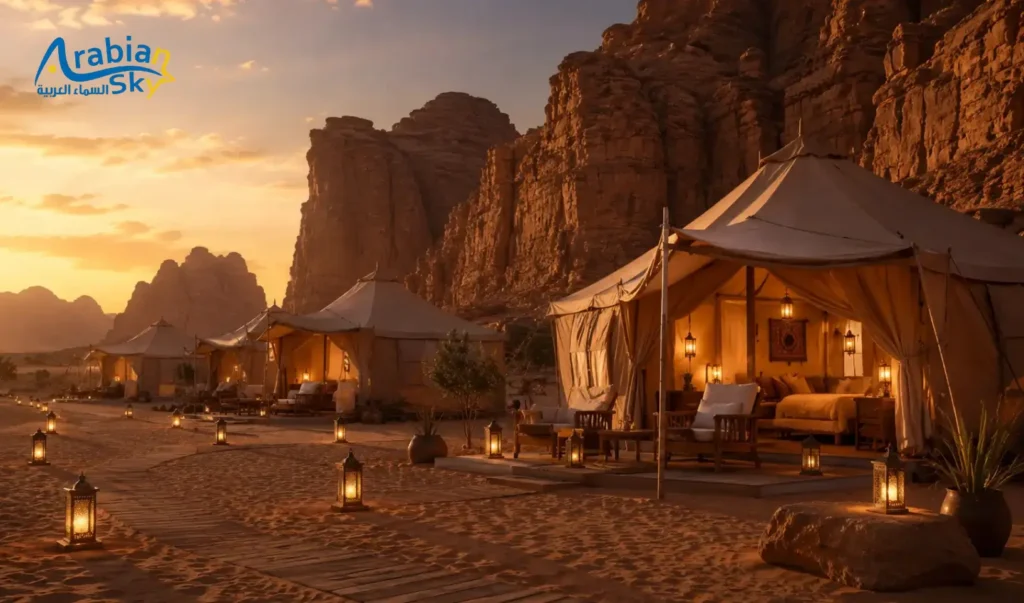
Sleeping Under the Stars: Saudi Arabia’s Best Desert Camping Spots 2026 Desert camping in Saudi Arabia sounds, on paper, like a simple weekend plan. Pack a tent, drive somewhere with sand, watch the sunset. In practice, it’s one of the most genuinely transformative travel experiences the Kingdom offers and also one where getting the location wrong can turn a magical night into a very long, very cold, very confused few hours. The good news is that Saudi Arabia has quietly become one of the most varied desert camping destinations on the planet. Within a single country, you can pitch a tent beside a canyon lined with palm trees, sleep on a dune inside the world’s largest contiguous sand sea, or book a glamping suite with marble bathrooms fifteen minutes from a UNESCO World Heritage Site. Few places offer that kind of range. Here’s an honest breakdown of where to actually go, and why each spot earns its reputation. Riyadh Desert Camping: The Easiest Way In If you’re based in or near the capital, Riyadh desert camping is genuinely the simplest entry point into this entire experience, no flights, no multi-day expedition planning, just a drive of an hour or less. Red Sand Dunes, roughly 90 kilometres from central Riyadh, are the most popular option for exactly that reason. Copper-orange dunes stretch to the horizon, and on any winter Thursday evening you’ll find hundreds of Saudi families already set up with carpets, portable kitchens, and strings of lights strung between vehicles. Organised overnight safaris here, dune bashing, camel rides, a campfire dinner, and tent accommodation, typically run from around SAR 649 per person, or you can wild camp for free if you bring your own gear. Thumamah, just 40 kilometres from downtown, is the more casual version of the same idea, popular with locals for weekend dune bashing and a good introduction to sleeping on sand without venturing far from help. Al-Samama, north of the city, offers a similar setup with recreational extras like camel riding and off-road vehicle activities layered in for those who want more than just a quiet night under the stars. Edge of the World: Dramatic Views, Serious Preparation Also within reach of Riyadh, roughly 90 kilometres northwest this time, the Edge of the World camping spots sit along the Tuwaik Escarpment, delivering a sheer cliff drop-off overlooking ancient caravan routes below. Most experienced campers set up a few kilometres back from the actual edge, since winds tend to pick up sharply after sunset. A proper 4×4 with high clearance is non-negotiable here, this isn’t a spot for a rental sedan, regardless of how confident you feel about the road. AlUla: Where Camping Meets Luxury Among all the camping spots in Saudi Arabia, AlUla’s Ashar Valley has built the Kingdom’s most refined glamping scene, and it isn’t subtle about it. The Ashar Tented Resort by Banyan Tree features 47 ultra-luxury suites with en-suite bathrooms and air conditioning, just 15 kilometres from the UNESCO-listed Hegra archaeological site. Our Habitas AlUla offers a similar eco-luxury tier nestled among the sandstone formations. Beyond the comfort factor, AlUla holds a genuinely remarkable distinction, its Manara and AlGharameel Nature Reserves became the first DarkSky International-certified parks in the Middle East. The Empty Quarter: Camping for the Committed The Rub’ al Khali, better known as the Empty Quarter, is the largest contiguous sand desert on Earth, and camping here is not a casual undertaking. Dunes reach heights of over 250 metres, and the silence is, by every account, absolute. Most visitors access it from Sharurah, joining organised multi-day tours that include 4×4 vehicles, full camping equipment, and experienced guides, typically running SAR 1,500–3,000 per person over two to ten days. Solo camping here is strongly discouraged, cellular coverage disappears entirely in the deep desert. Hisma Desert and Wadi Al Disah: The Underrated Alternative In Saudi Arabia’s northwest Tabuk region, the Hisma Desert is often compared to Jordan’s Wadi Rum, and the comparison holds up. Crimson sand plains punctuated by towering sandstone pillars and narrow gorges create a landscape that feels genuinely different from anything near Riyadh or AlUla. Nearby, Wadi Al Disah offers something rarer still, a canyon filled with palm trees and freshwater streams, red sandstone cliffs rising on either side. It’s one of the few places in the Kingdom where desert camping comes with an actual water source and greenery within view of your tent. Common Mistakes to Avoid Why It’s Worth Planning Around Rather Than Rushing Into A well-chosen night of desert camping in Saudi Arabia tends to follow a familiar pattern, brutal midday heat gives way to a spectacular golden hour, then a rapid cool-down, then a sky so clear and dark that first-timers often just stand there for several minutes before setting up anything. That’s genuinely the appeal, and it’s also why timing and location matter more here than in most camping decisions. The National Center for Vegetation Cover Development and Combating Desertification now manages dozens of designated camping sites across the Kingdom, worth checking their guidance on permitted areas before choosing a wild camping spot, particularly if you’re heading somewhere less established than the main hubs. What This Looks Like in Practice A group of friends drives out from Riyadh on a Thursday evening, sets up at Thumamah with rented gear, and spends the night dune bashing before sleeping under a genuinely impressive sky, total cost barely more than a nice dinner out. Meanwhile, a couple flies into AlUla for a three-night stay at a luxury tented resort, waking each morning to sandstone canyon views, spending days exploring Hegra, and enjoying evenings stargazing from a private terrace. Same country, same basic concept, completely different trip. Arabian Sky Travels regularly helps travelers figure out exactly which version fits them, since the right camping spot depends entirely on how much comfort, distance, and adventure someone’s actually looking for. Frequently Asked Questions Is desert camping in Saudi Arabia legal for tourists?Yes. Wild camping is legal across most public desert
Best Time to Visit AlUla: A Season-by-Season Guide
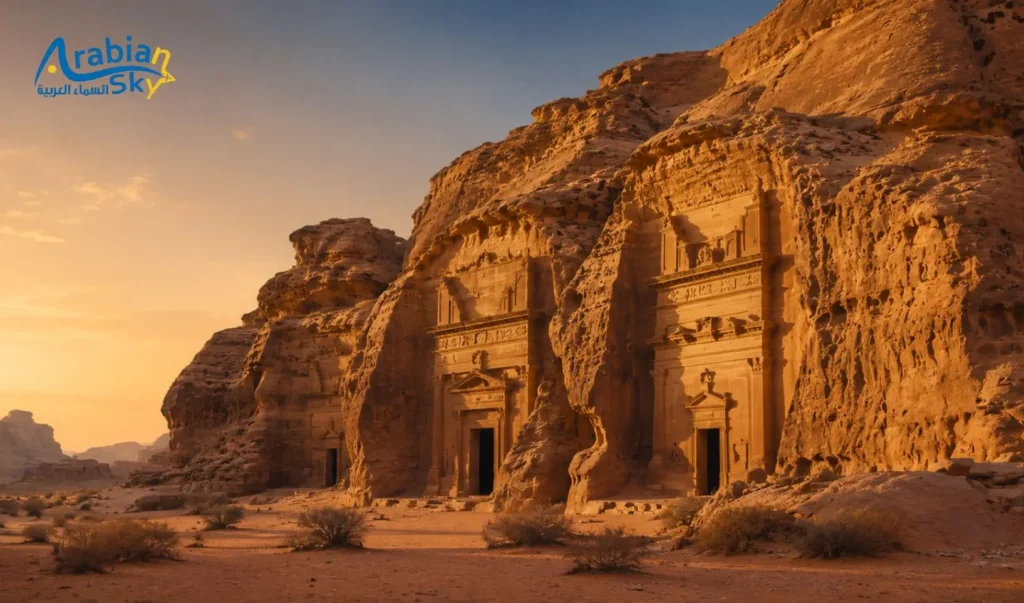
Best Time to Visit AlUla: A Season-by-Season Guide The best time to visit AlUla isn’t really a debate among people who’ve actually been there. Ask anyone who’s stood in that desert at the wrong time of year, sweating through a t-shirt at ten in the morning, and they’ll tell you exactly why timing matters more here than almost anywhere else in Saudi Arabia. AlUla sits in a strange, wonderful position. It’s one of the most photographed places in the Kingdom right now, sandstone canyons, Nabataean tombs carved straight into rock faces, an entire ancient city hiding in plain sight at Hegra. But it’s also a genuine desert, and deserts don’t forgive bad planning. So here’s the honest, season-by-season breakdown, not the polished tourism-board version, the version that actually helps you pick your dates. Winter: The Obvious Answer, and For Good Reason From late November through February, AlUla hits its sweet spot. Daytime temperatures typically sit in the comfortable low-to-mid 20s Celsius, mornings and evenings can dip cool enough for a light jacket, and this is genuinely the AlUla weather most people picture when they imagine the trip. This is also, unsurprisingly, peak season. Everyone else figured out the same thing you just did. Winter at Tantora: The Festival That Defines the Season If there’s one single reason winter dominates every “best time to visit AlUla” conversation, it’s Winter at Tantora. This is AlUla’s flagship cultural festival, named after the traditional sundial once used by locals to mark the start of the winter planting season, and it transforms the Old Town and surrounding sites into something between an open-air concert, a heritage exhibition, and a genuine community celebration. The 2025-26 edition runs from 18 December 2025 to 10 January 2026, roughly three weeks packed with music performances at Maraya (the world’s largest mirrored building), guided cultural tours through Old Town, and events stretching out toward Hegra and the desert beyond. You can check current programming and exact dates directly through Experience AlUla’s official festival page or theVisit Saudi official Winter at Tantora page, since specific event lineups shift year to year. Booking accommodation during this window months in advance isn’t optional advice, it’s a requirement. Rooms at places like Habitas AlUla or Shaden Resort sell out well before the festival even begins. Shoulder Seasons: March–April and October–November Here’s the trade-off most guides don’t spell out clearly enough. AlUla weather during the shoulder months around winter stays genuinely pleasant, daytime temperatures climbing into the high 20s to low 30s, without the peak crowds or peak prices of December and January. March and April bring longer daylight hours, useful if you want extra time exploring Hegra or the Dadan and Jabal Ikmah rock art sites without rushing before sunset. October and November work similarly in reverse, the heat finally breaking after summer, crowds still building toward the winter festival rush. If your priority is a slightly quieter AlUla, without sacrificing much comfort, these windows are genuinely underrated. Summer: Why Almost Everyone Skips It May through September in AlUla means daytime temperatures regularly pushing past 40°C, sometimes well beyond it. This isn’t the kind of heat where you just drink more water and carry on, it’s the kind that shuts down outdoor exploration almost entirely during midday hours. That said, summer isn’t universally a write-off. Hotel rates drop noticeably, some indoor and evening experiences continue running, and if you’re specifically chasing lower prices and don’t mind restructuring your days around early morning and after-sunset activity only, it’s technically possible. Most visitors, understandably, don’t choose to test that theory. A Quick Month-by-Month Snapshot Common Mistakes to Avoid What This Looks Like in Practice A family planning their first AlUla trip books for late January, drawn by the promise of Winter at Tantora. They arrive to comfortable daytime temperatures, spend mornings exploring Hegra’s tombs, afternoons wandering Old Town’s art district, and evenings at outdoor festival concerts under a genuinely cold, clear desert sky. Everything about the timing works in their favor. A solo traveller books an impulsive July trip instead, drawn by discounted hotel rates. They quickly adjust plans around the heat, sightseeing only at dawn and after sunset, spending midday hours by the pool rather than out among the rock formations. It’s a different trip, not necessarily a bad one, but a completely different experience than the one the family had just months earlier. Frequently Asked Questions What is the single best month to visit AlUla? January is often considered the sweet spot, comfortable daytime temperatures, Winter at Tantora still running or recently concluded, and slightly easier availability than the December festival peak. Is Winter at Tantora worth planning an entire trip around? For most visitors, yes. It adds a cultural and musical dimension to AlUla that isn’t available the rest of the year, though the core historical sites like Hegra remain impressive regardless of season. How hot does AlUla actually get in summer? AlUla weather commonly exceeds 40°C during the day between June and August, with some days reaching higher. Early morning and evening remain the only comfortable windows for outdoor activity. Do I need to book accommodation far in advance for winter visits? Yes, particularly for the Winter at Tantora period. Popular properties can sell out four to six months ahead of the festival dates. Are shoulder season months (March-April, October-November) a good compromise? Generally yes. Weather remains comfortable enough for full days of exploration, with noticeably fewer crowds and slightly better availability than peak winter. Final Thoughts The best time to visit AlUla ultimately comes down to what you’re willing to trade. Winter delivers the full experience, ideal weather and Winter at Tantora’s cultural energy but demands early planning and higher prices. Shoulder seasons offer a smart middle ground. Summer works only for those who genuinely don’t mind restructuring an entire trip around avoiding the heat. Whichever window you choose, AlUla rewards visitors who plan around its climate rather than against it, this is a destination where timing isn’t a minor
Best Places to Visit in Riyadh: A Complete 2026 Guide
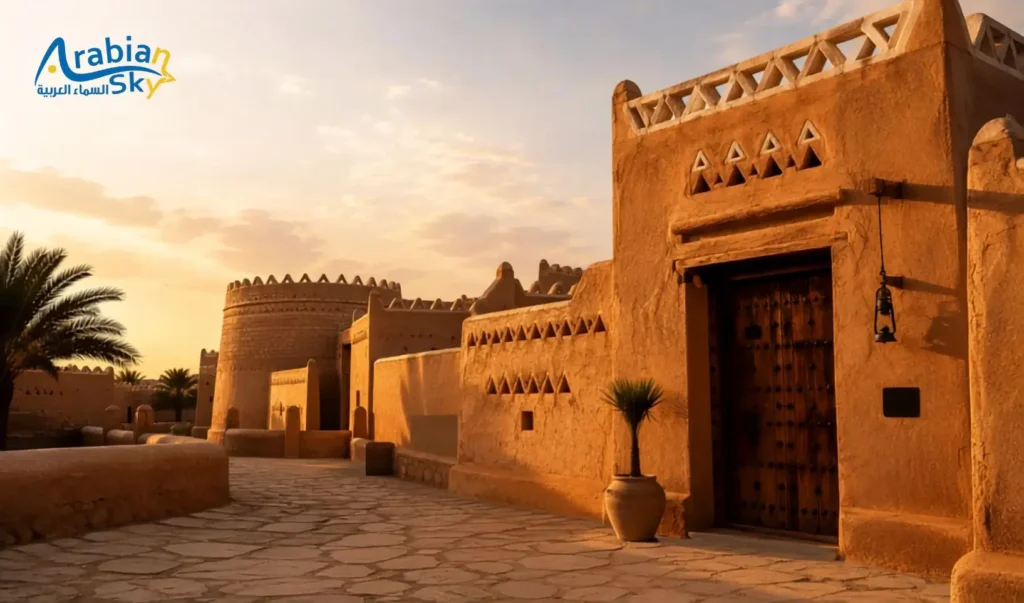
Best Places to Visit in Riyadh: A Complete 2026 Guide Places to visit in Riyadh used to mean one or two obvious answers a decade ago. Today the list has grown so much that even residents struggle to keep up with what’s new, what’s finished, and what’s still worth the trip despite the construction dust of a city rebuilding itself at record speed. That’s genuinely the story of Riyadh right now. A capital that spent decades being seen mainly as a business hub is turning into one of the region’s most interesting places to actually explore, on foot, by car, or with absolutely no plan at all beyond curiosity. Riyadh tourist attractions have grown fast enough that even a well-planned trip barely scratches the surface. If you’re wondering where to start, here’s an honest, non-generic breakdown of what’s actually worth your time, put together by the team at Arabian Sky Travels, who’ve spent years helping travellers explore the Kingdom properly rather than just ticking boxes. Diriyah: Where the Story Actually Begins Almost every list of places to visit in Riyadh puts Diriyah first, and for once, that’s not just lazy repetition. Diriyah is where the First Saudi State was founded, and the mud-brick architecture at At-Turaif has survived, and been carefully restored, well enough to make the history genuinely tangible rather than something you just read about on a plaque. Walking through At-Turaif at golden hour, when the light hits the Najdi-style walls just right, is one of those moments that photographs badly and feels incredible in person, which is honestly the best kind of attraction. Right next door, Bujairi Terrace has become the city’s go-to spot for dinner with a view of the old town lit up at night. It’s touristy in the best sense, busy, lively, clearly built for visitors, but it doesn’t feel manufactured. You can check current visiting hours, ticket pricing, and access routes directly through theDiriyah Gate Development Authority or the official Visit Saudi page on Diriyah before planning your visit, since road access around the site changes periodically as development continues. The National Museum of Saudi Arabia If Diriyah gives you the feeling of history, the National Museum gives you the full context. It’s genuinely one of the better-curated museums in the region, tracing everything from pre-Islamic Arabia through to the modern Kingdom, without feeling like a dry textbook walk-through. Give yourself at least two hours here. People who rush it tend to regret it afterward. Masmak Fortress: Small, but the Turning Point of Modern Saudi History Masmak doesn’t look like much from the outside, a modest clay and mudbrick fort in the middle of old Riyadh. But this is where a young Abdulaziz Al Saud retook the city in 1902, an event that eventually led to the founding of modern Saudi Arabia. It’s a quick visit, usually under an hour, but pairs well with a walk through the surrounding Old Riyadh souqs afterward. Kingdom Centre Tower: The View Everyone Photographs You’ve almost certainly seen a photo of the Kingdom Centre’s Sky Bridge without realizing it, that dramatic, upside-down-arch skyscraper is one of the most recognizable buildings in the country. The Sky Bridge observation deck at the top gives a genuinely impressive 360-degree view of the entire city, especially worthwhile just before sunset. Edge of the World: The Detour That’s Worth the Drive This one takes actual effort, roughly a 90-minute drive northwest of the city, part of it off-road. But Jebel Fihrayn, better known as Edge of the World, delivers exactly what the name promises: a dramatic cliff edge with views stretching out over what feels like an endless desert plateau. Go with a group who has proper 4×4 experience, or book through a tour that handles the logistics. This is not a spot to attempt casually in a rental sedan. A Quick Practical Tip Bring more water than you think you need, and check the weather before heading out. Summer heat in this part of the desert is no joke, and it’s exactly the kind of detail that separates a rushed trip from one of the truly great places to visit in Riyadh. Wadi Hanifah: The Green Space Riyadh Didn’t Used to Have For a city surrounded by desert, Wadi Hanifah is a genuinely surprising contrast, a long, rehabilitated valley with walking paths, small lakes, and green space stretching through the city. It’s one of the more successful urban environmental projects in the region and a favorite for evening walks once the heat breaks. Boulevard Riyadh City and Souq Al Zal For a completely different pace, Boulevard Riyadh City delivers modern entertainment, restaurants, seasonal events, and enough energy to fill an entire evening. It’s the closest thing Riyadh has to a purpose-built entertainment district. For the opposite experience, Souq Al Zal near Masmak Fortress is where you go for a proper traditional market, antiques, textiles, and the kind of unhurried haggling culture that’s slowly disappearing elsewhere. Common Mistakes First-Time Visitors Make Why Riyadh Rewards a Little Planning Riyadh isn’t a city that reveals itself from a hotel window. The best places to visit in Riyadh tend to reward people who plan by theme, a heritage day around Diriyah and Masmak, a modern city day around the Boulevard and Kingdom Centre, an adventure day out at Edge of the World. Frequently Asked Questions How many days do I need to see the best places to visit in Riyadh? Three to four days covers the highlights comfortably without rushing. Add an extra day if you want to properly explore Diriyah and its surrounding restaurants at a relaxed pace. Is Riyadh walkable, or do I need a car? Some areas, like Boulevard Riyadh City or Old Riyadh around Masmak, are walkable in sections, but the city overall is spread out. A car or ride-hailing app is genuinely necessary to move between major areas. What’s the best time of year to visit Riyadh? November through March offers the most comfortable temperatures for outdoor exploration, particularly
Best Travel Agency in KSA — What to Look For in 2026

Best Travel Agency in KSA — What to Look For in 2026 A good travel agency in KSA used to mean one simple thing: calling someone you trusted, telling them where you wanted to go, and letting them handle the rest. Somewhere along the way, that simplicity got buried under a hundred booking apps and flight deals that mysteriously double in price at checkout. And yet, the best trips people take today still usually involve a real travel agency working behind the scenes. Not because technology failed us, but because planning a trip well takes more than filtering search results. It takes someone who knows the destinations, understands visa paperwork, and picks up the phone when something goes wrong the night before your flight. So if you’re searching for a trusted travel company in KSA right now, you’re not being old-fashioned; you’re being smart. The real question isn’t whether to use one; it’s how to pick the right one in a market that’s grown fast and a lot more crowded. Let’s go through what actually separates a genuinely good travel agency from one that’s just good at marketing itself. Why the Right Travel Agency Actually Matters Here’s a scenario that plays out more often than you’d think. Someone books a Hajj package through an unlicensed operator found via a WhatsApp forward. The price looked great. Three weeks before departure, the “agency” stops replying. No refund, no rebooking, no pilgrimage. This isn’t some rare horror story. It’s exactly why Saudi Arabia’s tourism authorities have tightened licensing rules over the past few years and why choosing carefully matters more in 2026 than it did a decade ago. A good travel agency in KSA isn’t just a booking service. It’s risk protection, local expertise, and one clear point of accountability if anything goes sideways. What to Look For in a Travel Agency in KSA 1. Proper Licensing. Non-negotiable. Any legitimate travel agency operating in Saudi Arabia should hold a valid tourism license issued by the Saudi Ministry of Tourism and, if they arrange Hajj or Umrah trips, accreditation through the Ministry of Hajj and Umrah’s official Nusuk platform as well. Simple gut check: if an agency can’t produce a licence number when asked, that tells you everything. A legitimate operator will have it ready and will respect you more for asking. 2. Real Reviews, Not Just Testimonials There’s a difference between curated quotes on a website and a Google Business Profile full of genuine, dated reviews from real travellers. Look for reviews mentioning specific destinations or trip dates, a natural mix of ratings rather than a wall of five stars, and recent activity rather than silence since three years ago. 3. Transparent Pricing A trustworthy travel agency in KSA breaks down exactly what you’re paying for, flights, accommodation, transport, and service fees, rather than handing you one lump number. If a price looks dramatically lower than everyone else’s for the same package, ask why. Sometimes it’s a genuine deal. More often, corners are being cut somewhere you won’t discover until you’re already there. 4. Personalisation, Not Templates The best travel agency in KSA won’t hand you a pre-built package and call it a day. They’ll ask what you actually want first. Your ideal trip to Georgia looks nothing like someone else’s, even visiting the exact same country. A quick test: during your first conversation, notice whether they’re asking about your preferences or just pushing packages at you. 5. Depth of Destination Knowledge Anyone can sell you a flight and a hotel. Far fewer can tell you which neighbourhood in Tbilisi actually has good transport links or why visiting Al Ula in April beats July by a mile. That kind of knowledge only comes from agencies with real regional expertise. 6. Support That Doesn’t Disappear After Booking This is the one people forget to check until they need it. What happens if your flight gets cancelled, or your hotel loses your reservation? A good agency treats the booking as the start of the relationship, not the end. Ask what happens if something goes wrong while travelling. Their answer tells you everything. Common Mistakes to Avoid When Choosing a Travel Agency in KSA The Real Benefits of Booking Through a Trusted Agency Working with an established, licensed travel agency in KSA means you’re buying time saved on research and planning; local negotiating power that gets better rates than booking solo, a safety net if plans change mid-trip; and insider knowledge you’d never stumble across through a generic search. This matters even more for sensitive trips like Hajj and Umrah, where the logistics are far more complex than a typical holiday. What This Looks Like in Practice Picture two travellers planning a two-week trip through Georgia and Azerbaijan. One books everything themselves through a mix of apps, saves a small amount upfront, spends fifteen hours researching, and discovers too late that their hotel in Tbilisi is a forty-minute taxi ride from anything worth seeing. The other works with a licensed travel agency in KSA that specialises in the region. A single phone call describing what they want, a mix of culture, food, and relaxed pacing, and they receive a full itinerary within 48 hours, along with a local contact number. The trip costs about the same in the end. The experience isn’t even close. That’s the real value a good agency brings. Not just booking convenience, but decisions made with actual expertise standing behind them. Frequently Asked Questions Is it more expensive to book through a travel agency than doing it myself?Not necessarily. Agencies often access rates through partnerships individual travellers can’t reach, and factoring in time saved and mistakes avoided, the total cost is often comparable or lower. How do I verify if a travel agency in KSA is properly licensed?Ask for their tourism license number, and for Hajj or Umrah packages, their Ministry of Hajj and Umrah accreditation. Check recent, verified reviews on their Google Business Profile too. What’s the difference between a
